
Grassroot People and Gender Development Center (GRADE) is a Nigerian non-profit organization founded in 2010 and formally registered in 2014. We are dedicated to advancing Gender Equality and Women & Girls’ Empowerment (GEWGE) by creating opportunities for women and girls, protecting children, strengthening families, promoting healthy communities, and fostering sustainable development.
At GRADE, we believe that meaningful development begins at the grassroots. We work alongside communities to identify their strengths, address their challenges, and co-create practical, sustainable solutions that improve lives and promote social justice.
Through partnerships with government institutions, civil society organizations, schools, community leaders, the private sector, and development partners, we implement evidence-based programmes that empower people and strengthen community resilience.
Our Vision

A just, inclusive, and resilient society where women, girls, children, and vulnerable populations live free from discrimination, violence, and poverty, and have equal opportunities to thrive.
Our Mission

o advance gender equality and empower women and girls by promoting child protection, health and well-being, food security, climate action, leadership development, and community-driven solutions that improve lives and strengthen resilient communities.
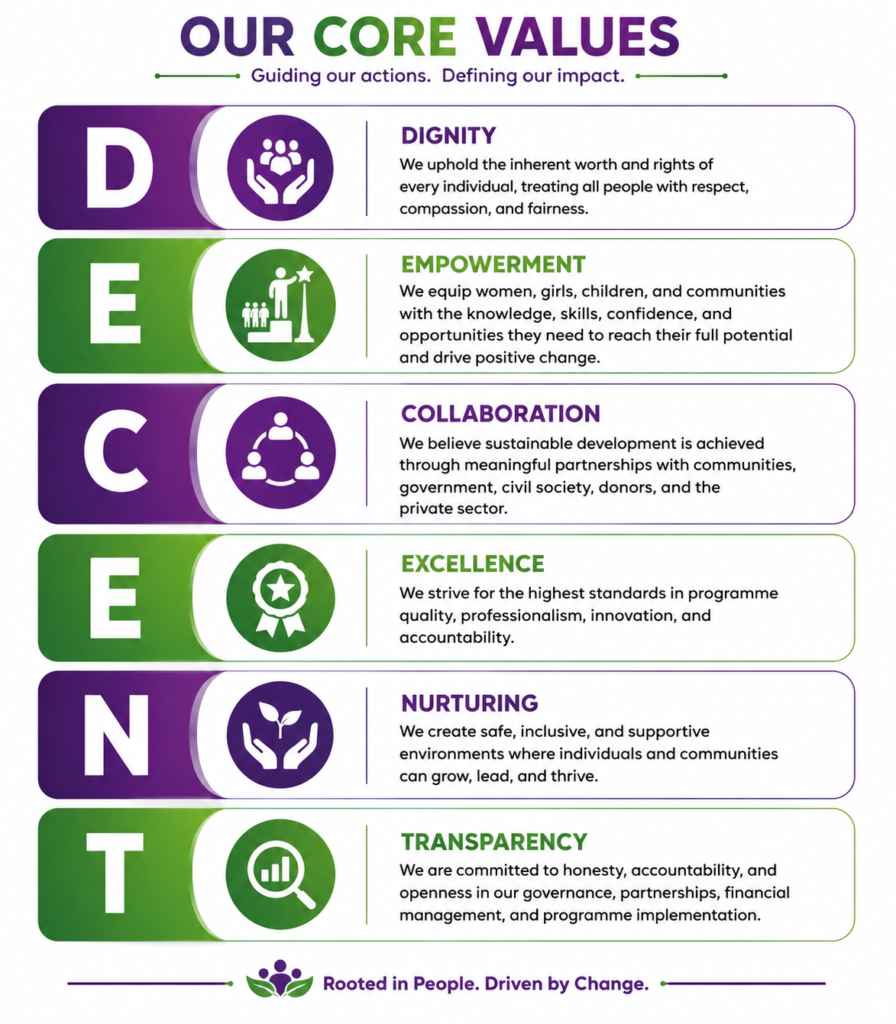
At Grassroot People and Gender Development Center (GRADE), our work is driven by more than projects—it is guided by values that shape every decision, partnership, and community we serve.
Our DECENT values reflect our unwavering commitment to creating inclusive, resilient, and empowered communities.
These values are more than words, they are the foundation of our mission to advance gender equality, protect children, empower women, strengthen communities, and improve the lives of vulnerable populations.
Together, we are building communities where everyone has the opportunity to live with dignity and reach their full potential.
Because at GRADE, development begins with people.
Our First Event for Girls
Ist Community Conference on Sexual and Reproductive Health and Rights
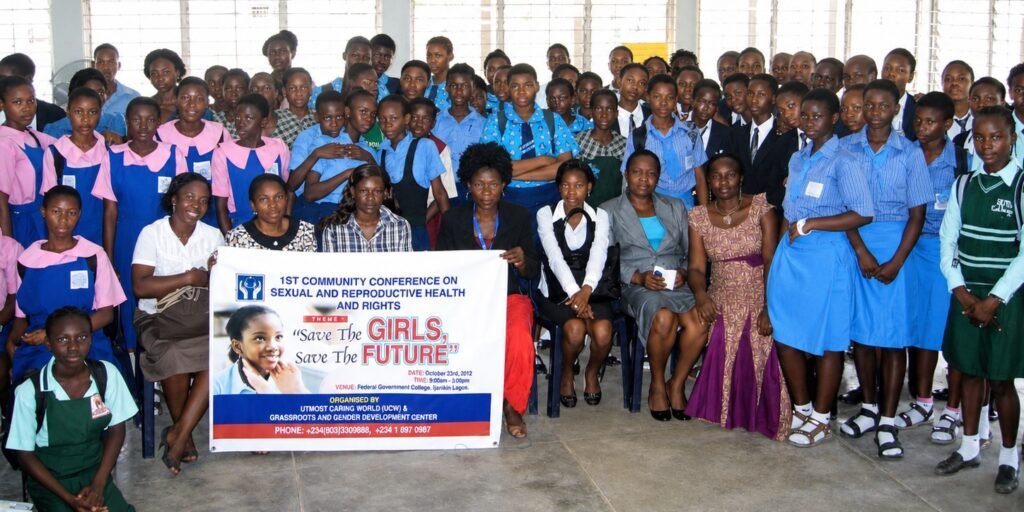
In October 2012, Grassroot People and Gender Development Center (GRADE) organized its first major community event—the 1st Community Conference on Sexual and Reproductive Health and Rights. Held at Federal Government College, Ijanikin, Lagos, the conference brought together students, educators, community leaders, and development practitioners under the inspiring theme:
“Save the Girls, Save the Future.”
This landmark event marked the beginning of GRADE’s journey to empower girls and young people with the knowledge, confidence, and life skills needed to make informed decisions about their health, education, and future.
Recognizing that many adolescents lacked access to accurate information on sexual and reproductive health, the conference created a safe and interactive platform where participants openly discussed issues such as puberty, gender equality, personal safety, reproductive health, self-esteem, education, and the protection of girls’ rights.
More than just a one-day event, the conference laid the foundation for GRADE’s long-term commitment to promoting gender equality, child protection, youth leadership, and community development across Nigeria.
The success of this inaugural programme demonstrated the power of community partnerships in addressing social challenges and inspired the organization to expand its work into schools, communities, and vulnerable populations over the years.
Today, more than a decade later, GRADE has grown into a respected grassroots organization implementing programmes reaching the vulnerable groups and hard to reach communities.
This photograph is more than a group picture—it captures the moment our vision became action. It reminds us that every impactful journey begins with a single courageous step, and that investing in girls today creates stronger families, resilient communities, and a better future for all.
“Save the Girls, Save the Future” was not just the theme of our first conference—it remains a guiding principle that continues to shape our mission of empowering people and transforming communities.
GRADE was founded on a simple belief: lasting change begins when people are empowered with knowledge, opportunity, and hope.
Our journey started with a passion for community service and inspired a lifelong commitment to giving back to society. As our work in communities grew, so did our understanding of the interconnected challenges affecting women, girls, children, and vulnerable populations. We witnessed gender inequality, violence against women and children, limited educational opportunities, food insecurity, poor health outcomes, environmental challenges, and economic hardship. These experiences shaped our vision of an organization that addresses these issues through integrated, community-led solutions.
Our quote
“Investing in girls is not charity—it is one of the smartest investments we can make for a more just and prosperous society.”
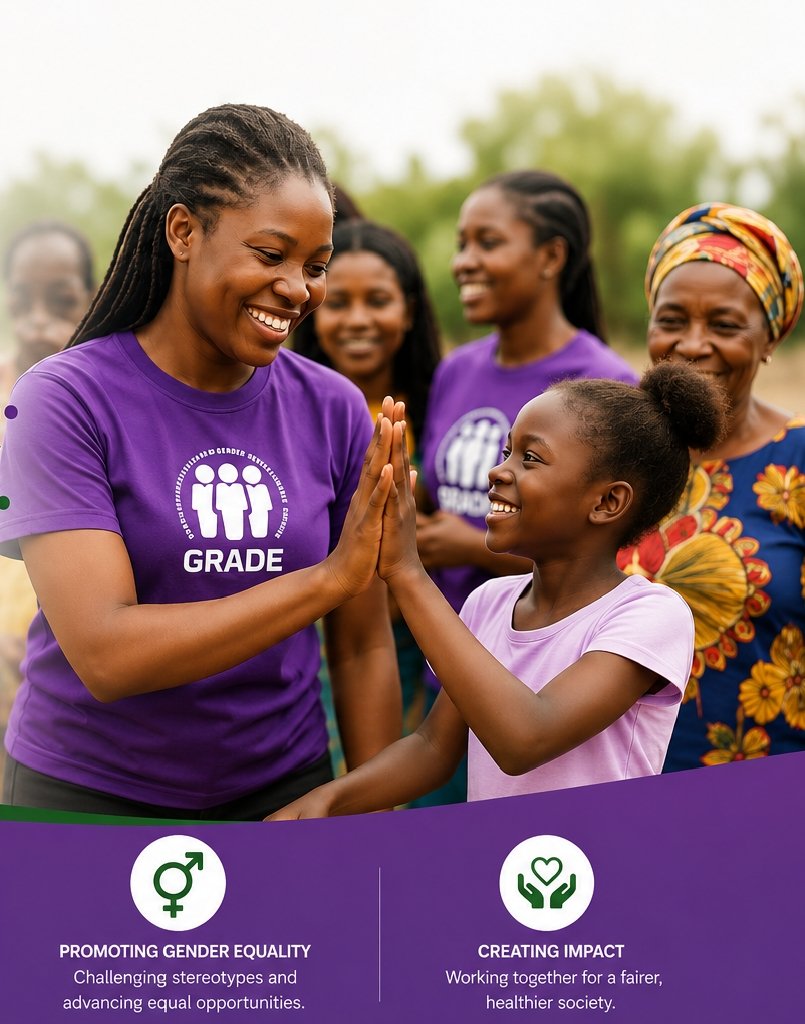
“We Caught the Girls First.”
We reached them before poverty stole their dreams.
We reached them before harmful stereotypes defined their future.
We reached them before gender-based violence silenced their voices.
We reached them before child marriage, exploitation, trafficking, or abuse became their story.
Instead of waiting to respond to crises, GRADE invests in girls early—equipping them with knowledge, confidence, leadership skills, life skills, and the courage to speak up.
Through our Girls Corner, school-based clubs, mentorship programmes, safeguarding education, menstrual health initiatives, digital literacy, and leadership training, girls learn that:
- Their voices matter.
- Their bodies deserve protection.
- Education is their right.
- Leadership has no gender.
- They have the power to shape their own future.
We also work with parents, teachers, traditional leaders, faith leaders, and communities because protecting girls requires an environment that supports their growth and wellbeing.
Every girl we empower today becomes a woman who can transform her family, strengthen her community, and inspire the next generation
Our vision is to ensure that every girl grows up safe, educated, confident, and empowered to reach her full potential before inequality, violence, or harmful practices limit her opportunities.
Where We Work
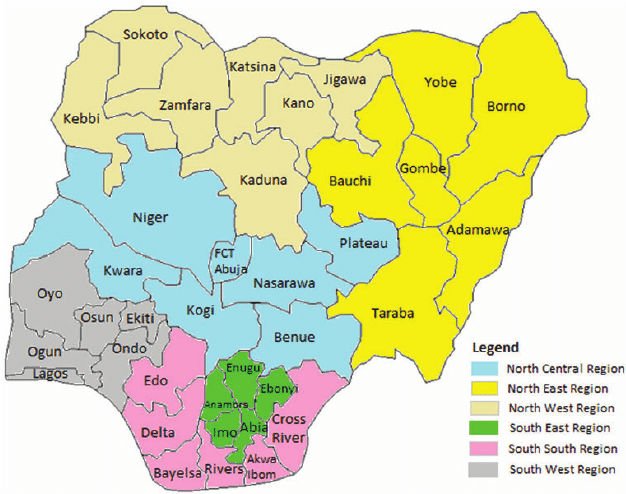
GRADE implements programmes in communities across Nigeria. We collaborate with schools, community-based organizations, government agencies, faith-based institutions, development partners, and the private sector to deliver sustainable, high-impact programmes that improve lives and strengthen communities.
Why Our Outreach Matters
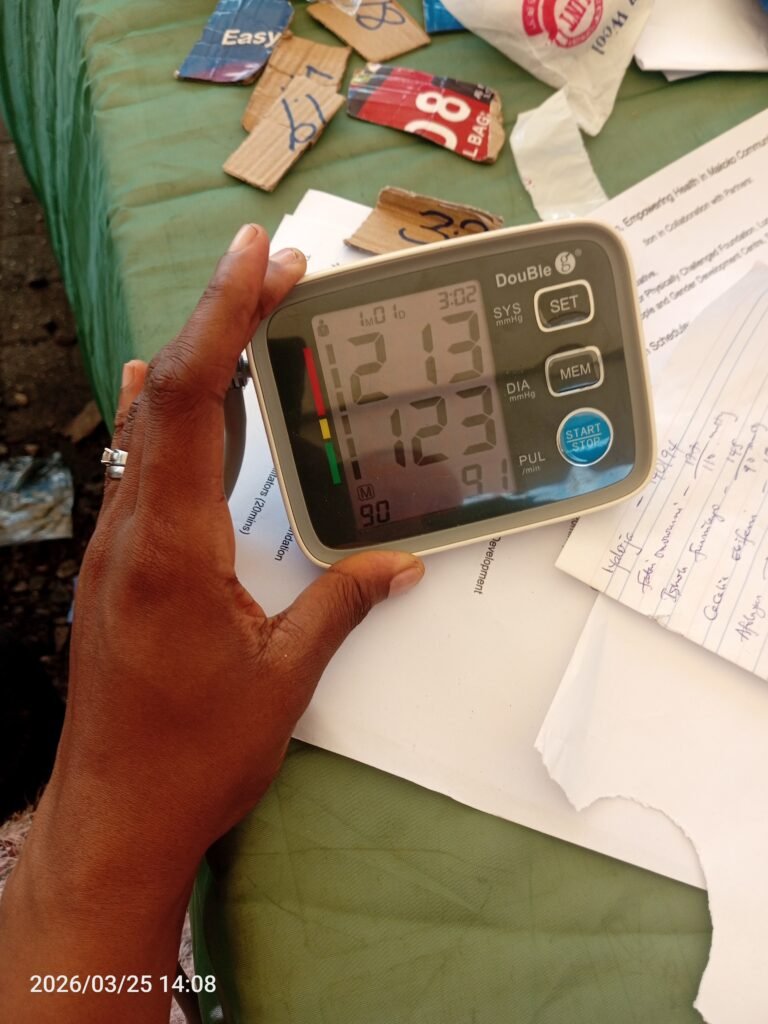
Many life-threatening health conditions, such as high blood pressure, show no early symptoms. Through our community outreach programmes, we provide free health screenings, health education, and essential support that enable people to detect health risks early and seek timely care. Together with our work in women’s empowerment, child protection, and community development, these interventions help build healthier families and stronger communities. Every outreach creates hope. Every intervention transforms lives.
