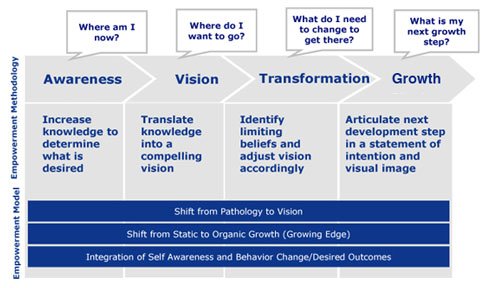

Our women empowerment workshop is drawn from the empowerment institute of David Gershon and Gail Straub.

David Gershon and Gail Straub created the Empowerment Workshop to explore the question:
How do you empower people to grow and realize their full potential?
They wanted to shift the focus of personal development from healing the past and fixing problems to focusing on what women wants for their lives, communities, and organizations and how to achieve it. Enabling women to envision their dreams and bring them to fruition was the heart of the approach called empowerment. The term empowerment was new in the vernacular of transformation, as an approach to personal development.
Through the Women Inspiration Development Centre, GraDe gained insight into the training and a sub grant to support and empower over 1500 women and girls in Lagos, Nigeria.
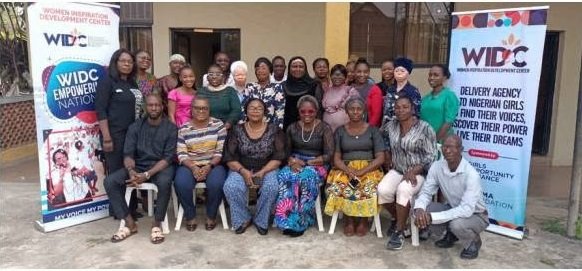
Many women settle for far less in their lives when they are capable of achieving more. They fall victim to impoverished dreams, dreams that don’t begin to do justice to their potential. They need to learn how to dream; how to boldly and courageously reach for their highest visions. This workshop helped women dare to dream and, equally important, give them the necessary skills and tools to realize these dreams. They learn how to harness the passion of their heart and the power of their mind and express their full potential.
GRADE has three certified trainers of the Empowerment Institute to provide psychosocial support and training for women to achieve their full potentials. Contact us to train women within your network/organization or community to help them achieve their dream today
The Seven Areas of Life
The Empowerment Workshop is built around seven interconnected dimensions that influence a woman’s overall wellbeing.
1. Emotional Wellbeing
Participants explore emotional intelligence, self-awareness, resilience, stress management, forgiveness, healing from past experiences, and healthy coping strategies.
Women learn to:
- Recognize and manage emotions.
- Build self-confidence.
- Respond constructively to life’s challenges.
- Develop a positive mindset.
2. Relationships
Healthy relationships are essential for individual and family wellbeing. This module focuses on communication, trust, respect, conflict resolution, boundaries, and mutual support.
Participants learn to:
- Build stronger family relationships.
- Improve communication.
- Resolve conflicts peacefully.
- Develop supportive social networks.
3. Sexuality
Women receive accurate, respectful, and age-appropriate information about sexuality, reproductive health, consent, healthy relationships, and personal dignity.
Topics include:
- Sexual and reproductive health.
- Healthy relationships.
- Consent and personal boundaries.
- Gender equality.
- Prevention of gender-based violence.
4. Money
Financial wellbeing is explored through practical sessions on budgeting, saving, responsible spending, goal setting, and household financial management.
Women are encouraged to:
- Develop healthy financial habits.
- Plan for emergencies.
- Save consistently.
- Make informed financial decisions.
5. Work and Purpose
Participants reflect on their talents, strengths, aspirations, and career opportunities while developing action plans for personal and professional growth.
Sessions cover:
- Goal setting.
- Entrepreneurship.
- Career development.
- Time management.
- Leadership.
- Productivity.
6. Body
Women are encouraged to appreciate and care for their physical health through discussions on nutrition, exercise, self-care, body image, preventive healthcare, and healthy living.
Participants gain practical knowledge on:
- Nutrition.
- Physical activity.
- Personal hygiene.
- Preventive healthcare.
- Healthy ageing.
7. Spirituality
The programme encourages women to reflect on their values, purpose, integrity, gratitude, compassion, and personal beliefs while respecting diverse faith traditions.
Women are supported to:
- Develop inner peace.
- Strengthen personal values.
- Live purposefully.
- Build hope and resilience.
Place of Growth
A defining feature of the Empowerment Workshop is helping each participant identify her Place of Growth—the area of life where intentional change can create the greatest positive impact. Rather than comparing themselves with others, women develop personalized growth plans with achievable goals and practical steps.
This approach promotes sustainable transformation by recognizing that every woman’s journey is unique.
Training Methodology
The workshop uses highly participatory and experiential learning approaches, including:
- Interactive presentations.
- Guided self-reflection.
- Individual assessments.
- Small group discussions.
- Practical exercises.
- Storytelling.
- Role plays.
- Coaching and mentoring.
- Peer support circles.
- Personal action planning.
This learner-centred methodology creates a safe environment where participants can openly share experiences, learn from one another, and commit to meaningful personal growth.
Target Participants
The programme serves:
- Women in communities.
- Mothers and caregivers.
- Young women.
- Women’s groups.
- Faith-based women’s fellowships.
- Female entrepreneurs.
- Community leaders.
- Civil society organizations.
Partnerships
The Empowerment Workshop has been delivered through partnerships with community organizations, women’s associations, schools, faith-based institutions, and development partners, expanding access to transformational learning for diverse groups of women.
Achievements
Since its inception, the Empowerment Workshop has:
- Empowered more than 2,000 women and girls through structured personal development and leadership training.
- Helped women improve self-confidence, emotional wellbeing, and leadership capacity.
- Strengthened participants’ financial awareness and household decision-making.
- Promoted healthier relationships within families and communities.
- Increased awareness of gender equality, women’s rights, and personal wellbeing.
- Inspired women to become mentors, advocates, and community leaders.
Impact
The programme has contributed to:
- Increased confidence and self-esteem among participants.
- Improved emotional resilience and mental wellbeing.
- Better communication and stronger family relationships.
- Greater financial planning and savings practices.
- Increased participation of women in community leadership.
- Enhanced awareness of health, nutrition, and self-care.
- Stronger peer support networks that encourage continued learning and accountability.
Many participants report improved relationships, greater clarity about their life goals, and renewed confidence to pursue education, entrepreneurship, leadership roles, and community service.
Sustainability
GRADE promotes long-term impact by encouraging participants to:
- Join ongoing mentoring and support groups.
- Share knowledge within their families and communities.
- Mentor other women and girls.
- Participate in community leadership and advocacy initiatives.
- Continue implementing their personal growth plans through regular reflection and peer accountability.
Looking Ahead
GRADE plans to expand the Empowerment Workshop by:
- Reaching more rural and underserved communities across Nigeria.
- Developing a Training of Trainers programme to equip community facilitators.
- Creating digital learning resources for women unable to attend in-person sessions.
- Integrating livelihood and entrepreneurship support into future workshops.
- Strengthening partnerships with government agencies, civil society organizations, and development partners to increase the programme’s reach and sustainability.
By investing in women’s personal growth and leadership, GRADE is helping build stronger families, resilient communities, and a more equitable society where every woman has the opportunity to thrive.
The Empowerment Framework