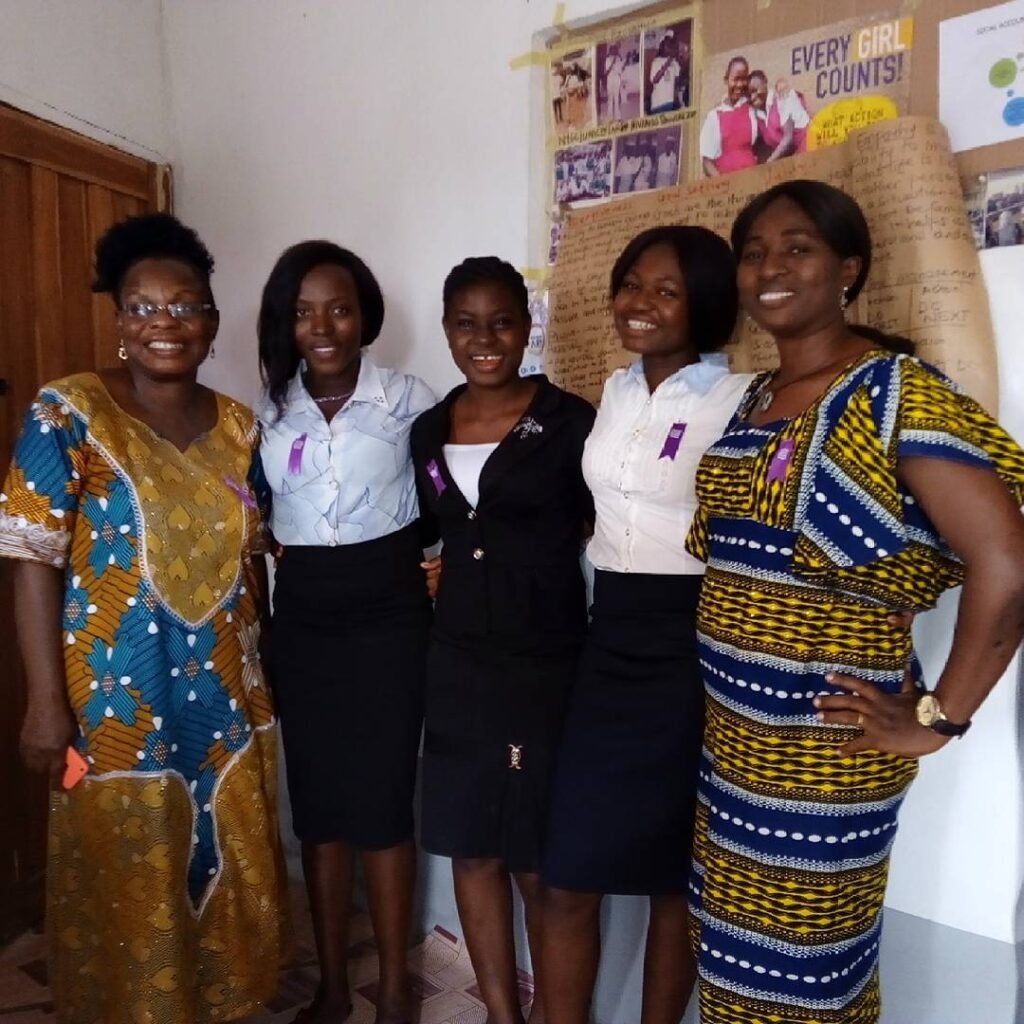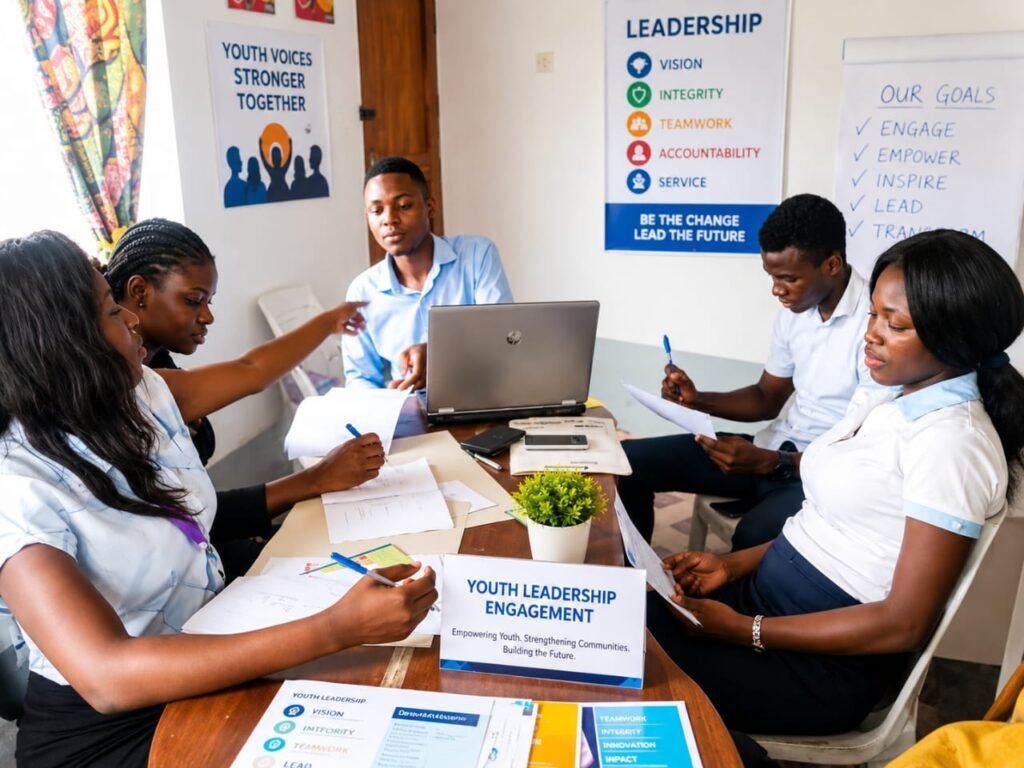

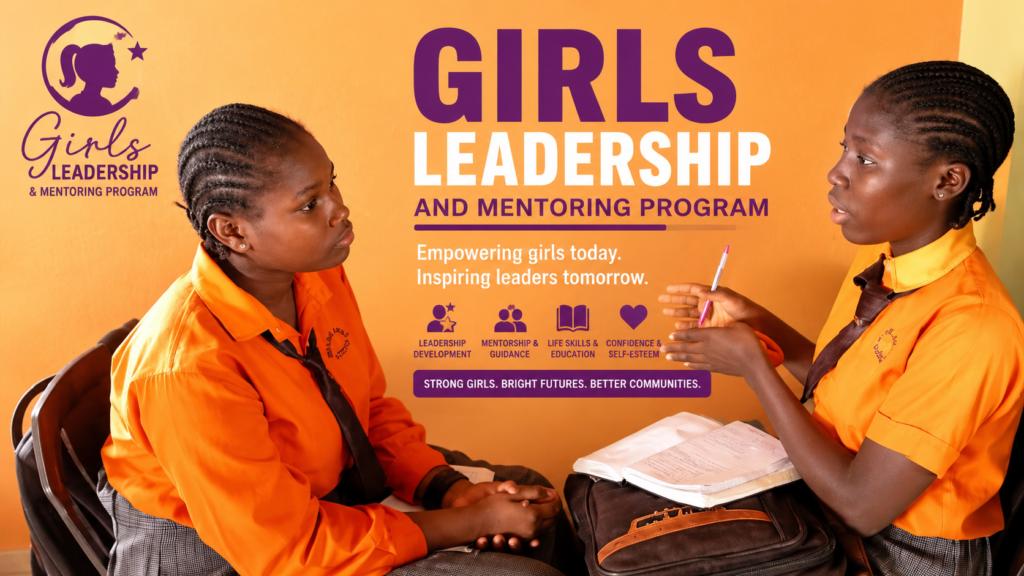
The Leadership and Mentoring Programme is designed to equip women, girls, and young people with the knowledge, skills, confidence, and support needed to become effective leaders and positive change agents in their families, communities, schools, workplaces, and society.
The programme provides opportunities for leadership development, mentorship, personal growth, life-skills training, decision-making, communication, self-confidence, advocacy, and civic engagement. Through structured training, mentoring relationships, peer learning, and practical community activities, participants are encouraged to discover their potential, develop their voices, make informed choices, and take meaningful action on issues affecting them and their communities.
The programme particularly supports girls and young women to overcome social and gender-related barriers, build resilience, develop leadership capacity, and participate actively in decision-making and community development.
Goal
To raise a generation of confident, informed, resilient, and socially responsible girls who are equipped to lead, make informed decisions, and contribute meaningfully to their communities.
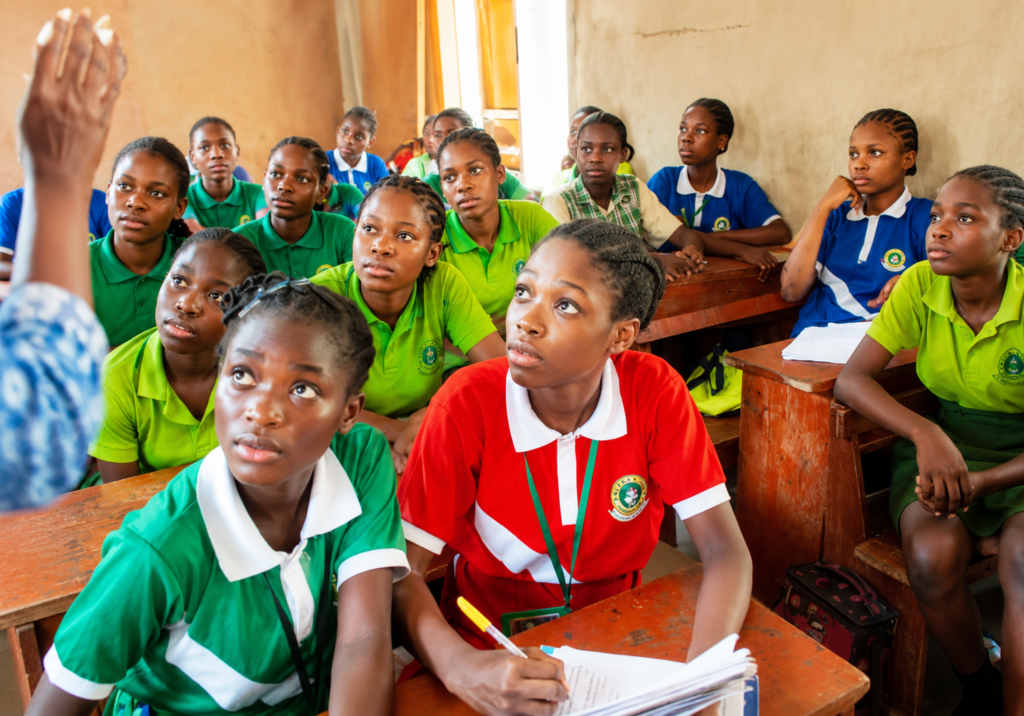
We have reached over 2000 girls under the Girls Leadership and Mentoring Programme (GLAMP)
The programme aims to:
- Strengthen leadership and life skills among adolescent girls.
- Improve girls’ self-confidence, self-esteem, and resilience.
- Increase knowledge of sexual and reproductive health and rights.
- Promote gender equality and the prevention of gender-based violence.
- Improve girls’ communication, public speaking, and decision-making skills.
- Encourage civic responsibility and volunteerism.
- Build a network of young female leaders who inspire positive social change.
Target Beneficiaries
The programme serves:
- Adolescent girls (10–19 years)
- Secondary school students
- Out-of-school girls
- Young women
- Girl leaders
- Peer educators
Implementation Strategy
GRADE works closely with:
- Schools
- Parents
- Teachers
- Community leaders
- Government institutions
- Civil society organizations
- Development partners
Training is delivered through:
- Interactive workshops
- Mentoring sessions
- Group discussions
- Peer learning
- Role plays
- Educational games
- Practical exercises
- Community outreach
- Leadership camps
Programme Achievements
Over the years, the Leadership and Mentoring Programme has:
- Trained hundreds of adolescent girls across Lagos State.
- Reached more than 120 girls during the First Community Conference on Sexual and Reproductive Health and Rights, bringing together participants from different secondary schools.
- Established a supportive mentoring platform through the Girls Corner WhatsApp Community, created during the COVID-19 pandemic and still active today.
- Increased awareness of gender equality, child protection, menstrual health, leadership, and sexual and reproductive health.
- Equipped girls with practical life skills that improve decision-making, confidence, and resilience.
- Inspired participants to become peer educators and advocates against gender-based violence.
Programme Impact
Through this initiative, many girls have demonstrated:
- Improved confidence and self-esteem.
- Better leadership and communication skills.
- Increased knowledge of their rights and responsibilities.
- Greater awareness of sexual and reproductive health.
- Improved ability to identify and report abuse.
- Stronger aspirations for education and career development.
- Increased participation in school and community leadership activities.
The programme has also strengthened relationships between girls, mentors, schools, and communities, creating safer environments where girls can thrive.
Why This Programme Matters
Every girl deserves the opportunity to lead, dream, and achieve her full potential. By investing in leadership development today, we are preparing a new generation of women who will transform families, strengthen communities, and contribute to sustainable national development.
Looking Ahead
GRADE plans to expand the Leadership and Mentoring Programme by:
- Reaching more underserved schools and communities.
- Establishing Girls Leadership Clubs in schools.
- Training peer mentors and youth ambassadors.
- Developing digital learning resources.
- Building partnerships with government agencies, schools, and development organizations.
- Increasing opportunities for girls to lead community action projects.
Together, we can empower more girls to become confident leaders and champions of change.